
Q caloric

The heat cost allocator family from QUNDIS

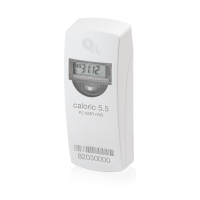
Electronic heat cost allocators are devices which are mounted to a radiator, and can measure the heat output and can save the data recorded. There are one-sensor and two-sensor heat cost allocators available, where the temperature at the radiator and the room temperature are measured separately. Two-sensor devices are able to distinguish “real” radiator heat from other heat sources such as sun radiation, and are thus also suitable for low-temperature heating systems. One-sensor variants assume a fixed room temperature. Both types of device can display and save different values, whether these are the cumulative value on a key date or the current value, and both have an error display.

The following types of device can be used in the given systems:

Electronic heat cost allocators for visual readout series 201S – Q basic

Electronic heat cost allocators for visual readout
201S series Q basic

These devices are readout visually and the measuring results are noted manually.
These are particularly suitable for tasks or systems that do not require complex data evaluation or particularly fast readout.

An additional feature of the 201S is dynamic heating operation detection which can distinguish between external and internal heating through the radiator.

Download brochure PDF (611 kB)

Download data sheet PDF (320 kB)


Electronic heat cost allocators for visual readout series WHE30 – Q basic

Electronic heat cost allocators for visual readout
WHE30 series – Q basic

These devices are readout visually and the measuring results are noted manually.
They are especially suited to tasks or systems that do not require complex data evaluations or particularly fast readout.

Download brochure PDF (562 kB)

Download data sheet PDF (149 kB)


Electronic heat cost allocators with IrDA interface series WHE37 – Q opto

Electronic heat cost allocators with optical interface
WHE37 series – Q opto (IrDA), can also be used in the Q basic system.

This series is equipped with an optical close-range interface (IrDA) through which the parameters can be programmed and the measuring values readout using a corresponding device. The readout process is made easier through the electronic readout of the metering devices in the property and optimised in terms of error detection and data transmission security.

Download brochure PDF (562 kB)

Download data sheet PDF (82 kB)


Electronic heat cost allocators with IrDA interface series 202S/K – Q opto

Electronic heat cost allocators with optical interface
202S/K series – Q opto (1107), can also be used in the Q basic system.

This series is equipped with an optical close-range interface (1107) through which the parameters can be programmed and the measuring values readout using a corresponding device. The readout process is made easier through the electronic readout of the metering devices in the property and optimised in terms of error detection and data transmission security.

Download brochure PDF (611 kB)

Electronic heat cost allocators for the recording of consumption data by radio series WHE465/466 – Q walk-by

Electronic heat cost allocator for the remote recording of consumption data by radio
WHE465/466 series – Q walk-by, can also be used in the Q basic system and in the Q AMR system (following reprogramming).

This series can be readout by radio in situ without the use of stationary data collectors. This means that it is no longer necessary to enter the property or note the readout values by hand. Errors in data transmission of data to the billing system are excluded to a large extent.
The heat cost allocators can be re-programmed once for use in the
Q AMR
system if required.

Download brochure PDF (713 kB)

Download data sheet PDF (105 kB)

Electronic heat cost allocators for the remote readout of consumption data by radio series WHE460/467 – Q AMR

Electronic heat cost allocator for the remote readout of consumption data by radio
WHE460/467 series – Q AMR, can also be used in the Q basic system.

This series can be readout using stationary data collectors. Readout can take place through different expansion stages in the building, outside the building or by remote data transmission. This means that it is no longer necessary to enter the flat (or even the building) and note the readout values by hand. Errors in transmission of data to the billing system are excluded to a major extent.

Download brochure PDF (685 kB)

Download data sheet PDF (95 kB)